
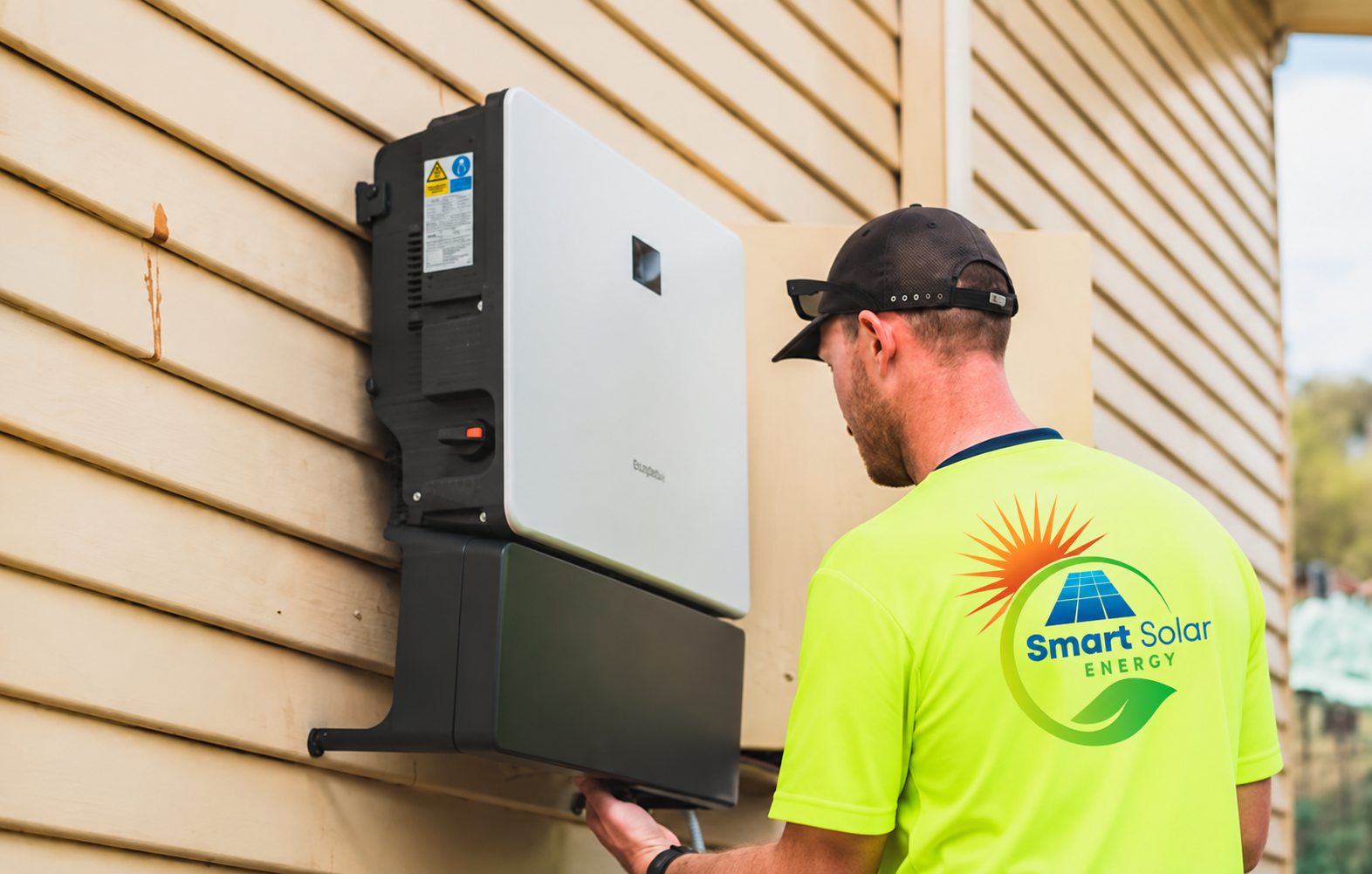
10kW Solar Battery Price in Australia
The 10 kWh battery is the most common size we install, and for good reason — it lines up almost exactly with what a typical family home uses after sunset. This guide covers what it costs installed, what you get for that, and whether 10 is actually the right number for your household.
A 10 kWh battery suits a household using roughly 15 to 25 kWh a day with most of that consumption in the evening. Installed cost depends on whether a hybrid inverter is needed and how much backup wiring your switchboard requires. It typically covers the full evening load for an average family home, which is why it remains the default recommendation.
kW or kWh — the confusion worth clearing up
Most people search for a "10kW battery" when what they actually want is 10 kilowatt hours of storage. The two measure different things, and conflating them leads to the wrong system.
What each number tells you
Kilowatt hours measure capacity, or how much energy the battery holds. Kilowatts measure power output, or how fast it can deliver that energy at any moment. A 10 kWh battery with a 5 kW output rating stores ten units and can supply five of them per hour at maximum draw.
Capacity determines how long you run on stored power. Output determines whether you can run the oven, the aircon and the kettle at the same time. Both matter, though capacity is what people are usually asking about.
What a 10 kWh battery costs installed
Indicative figures before any state incentives. Switchboard upgrades, long cable runs and outdoor enclosures are priced separately where required.
Why the same battery lands at different prices
The battery unit itself accounts for less of the variation than people expect. Whether your existing inverter can run storage, how far the unit sits from the switchboard, and whether you want backup circuits all shift the number considerably. Two identical batteries on the same street can differ by thousands for exactly those reasons.
Is 10 kWh the right size for you?
Capacity should be matched to evening consumption, not your daily total. Everything you use while the sun is up comes straight from the panels without touching the battery.
A 10 kWh battery is likely oversized. Something in the 5 to 7 kWh range covers evening use without paying for capacity that never cycles.
The sweet spot for 10 kWh. Evening consumption typically lands around 9 to 15 kWh, which this size covers almost entirely.
Consider 13.5 kWh or larger. A 10 kWh unit will empty before morning and leave you buying peak power anyway.
Usable capacity is less than the label
A 10 kWh battery doesn't give you 10 kWh. Depth of discharge limits how far it can safely drain, typically to around 90 to 95% on modern lithium units. That leaves roughly 9 to 9.5 kWh usable, which is worth factoring in when comparing against your evening load.
Our calculator shows how much of your evening load a 10 kWh battery would actually cover, plus runtime and blackout backup time.
Open the calculatorWhat you should get for the price
- The battery unit, mounting and any required enclosure
- Hybrid inverter or AC coupling equipment where needed
- All cabling, isolation and circuit protection
- Switchboard assessment, with upgrade costs disclosed upfront
- Backup circuit wiring if you want blackout capability
- Grid connection application and distributor approval
- Commissioning, testing and monitoring app setup
- Any applicable state incentive already deducted
Some 10 kWh systems are built from stackable modules, which means you can add capacity later without replacing the unit. Others are fixed at the size you buy.
Household usage tends to grow — an EV, a heat pump, a home office all add load. If that's likely within a few years, a modular system costs slightly more upfront and saves considerably more later.
Payback on a 10 kWh battery
Every kilowatt hour the battery supplies in the evening replaces one bought at peak rates, minus the small feed-in tariff you'd have earned exporting it. The wider that gap between your peak rate and your feed-in rate, the faster the battery pays for itself.
Why feed-in tariffs changed the maths
When feed-in rates were high, exporting made reasonable sense. As they've fallen, the value of storing energy for your own use has risen correspondingly. A household on a low feed-in tariff with an expensive peak rate sees the strongest case for storage.
Use our free solar battery sizing calculator → to find out exactly how much battery storage your 10kW system needs.
Frequently asked questions
Sizing, pricing, capacity and backup.
How much does a 10kW solar battery cost?
Installed cost depends mainly on whether your existing inverter can run storage. Where a hybrid inverter is already in place, the battery goes in for considerably less than a job requiring the inverter replaced. Backup wiring and switchboard condition also move the figure, which is why a fixed quote follows a site assessment.
How long does a 10kWh battery last per night?
With roughly 9 kWh usable after depth of discharge, a home drawing 1 kW continuously would run around nine hours. In practice consumption varies through the evening, so most households find a 10 kWh battery covers from sunset until morning without running flat.
Is 10kWh enough for a family home?
For a household using 15 to 25 kWh a day with typical evening patterns, yes. Homes using more than 25 kWh daily, or running significant overnight load, generally need 13.5 kWh or larger to avoid emptying the battery before morning.
Can I add more capacity later?
With modular systems, yes — additional modules stack onto the existing unit. Fixed-capacity batteries can't be expanded, so a second separate system would be needed. Worth deciding upfront if your usage is likely to grow.
Will a 10kWh battery run my house in a blackout?
Only where backup has been configured during installation, and usually across selected essential circuits rather than the whole home. Running fridge, lights and internet on around 275 W, a 10 kWh battery lasts well over a day. Adding aircon or cooking cuts that dramatically.
Send us your address and average usage, and you'll get an installed price with scope and rebates spelled out.
Request a free quote